Has the Content Bubble Finally Burst?
AI Slop, Synthetic Media, the Trust Recession, and a Return to Offline
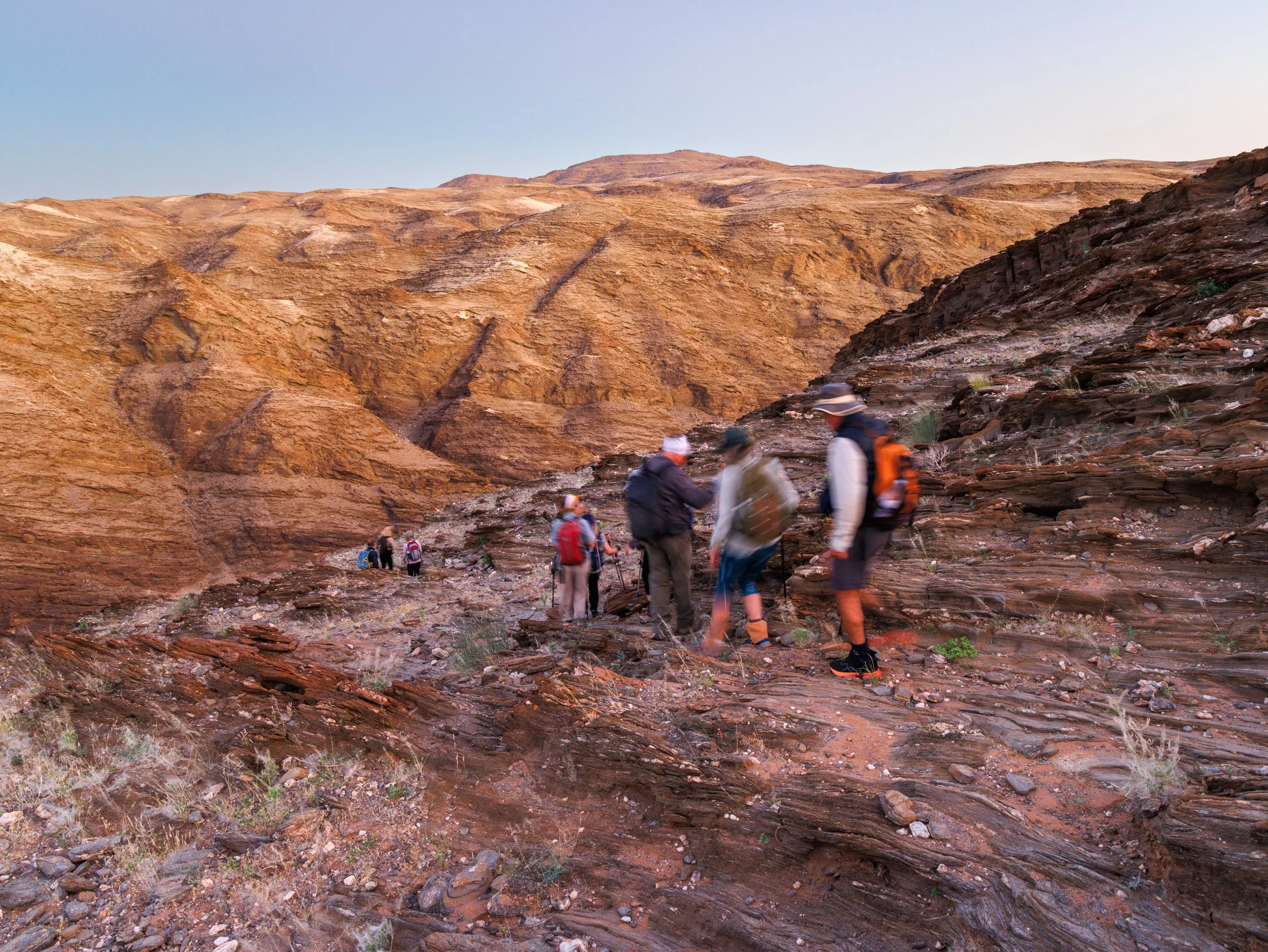
Offline experiences are becoming more valuable in an increasingly online synthetic world.
Hiking and photography in Namibia’s Most Remote Canyon, The Kuiseb
Turns out the old phrase “don’t trust everything you see on the internet” was pretty spot on.
Introduction: The Content Bubble
Have we reached peak digital saturation? The imbalance between the exponential growth of digital content production and the finite amount of human attention has never been greater. There is more to watch, more to read, more to listen to than ever before but it leaves us constantly feeling less and less rewarded: our cognitive capacity to consume combined with 24/7 access to a global audience appears to have reached its zenith. I was speaking with my brother on this subject the other week and both of us felt burned out on “content consumption”. Listening to others speak about their accomplishments was hollow. We wanted more of our own real-life experiences, to be an active participant rather than a passive onlooker.
The content bubble, as I’m calling it, appears to be bursting under the weight of several converging forces: 1) the sudden ubiquity of synthetic media creation via generative artificial intelligence, or AI slop; 2) a crumbling recession in trust driven at its core by algorithmic fatigue; and 3) the public desire for a rebalancing of media production, from chasing disingenuous viral hits via high volume output, to slower and more meaningful media that focuses on human-led authenticity. This is a deep structural correction not a cyclical bear market. This is attention moving towards intention.
In the face of this reality, what does it mean for nature and landscape photographers? How do professionals in the industry, like myself, adapt marketing strategies and artistic outputs (and should we even adjust at all)? Photographers producing work that is rooted in the real world and those that offer deeply meaningful offline experiences are arguably best positioned to weather the storm. Perhaps more importantly, they are positioned to change the world for the better.
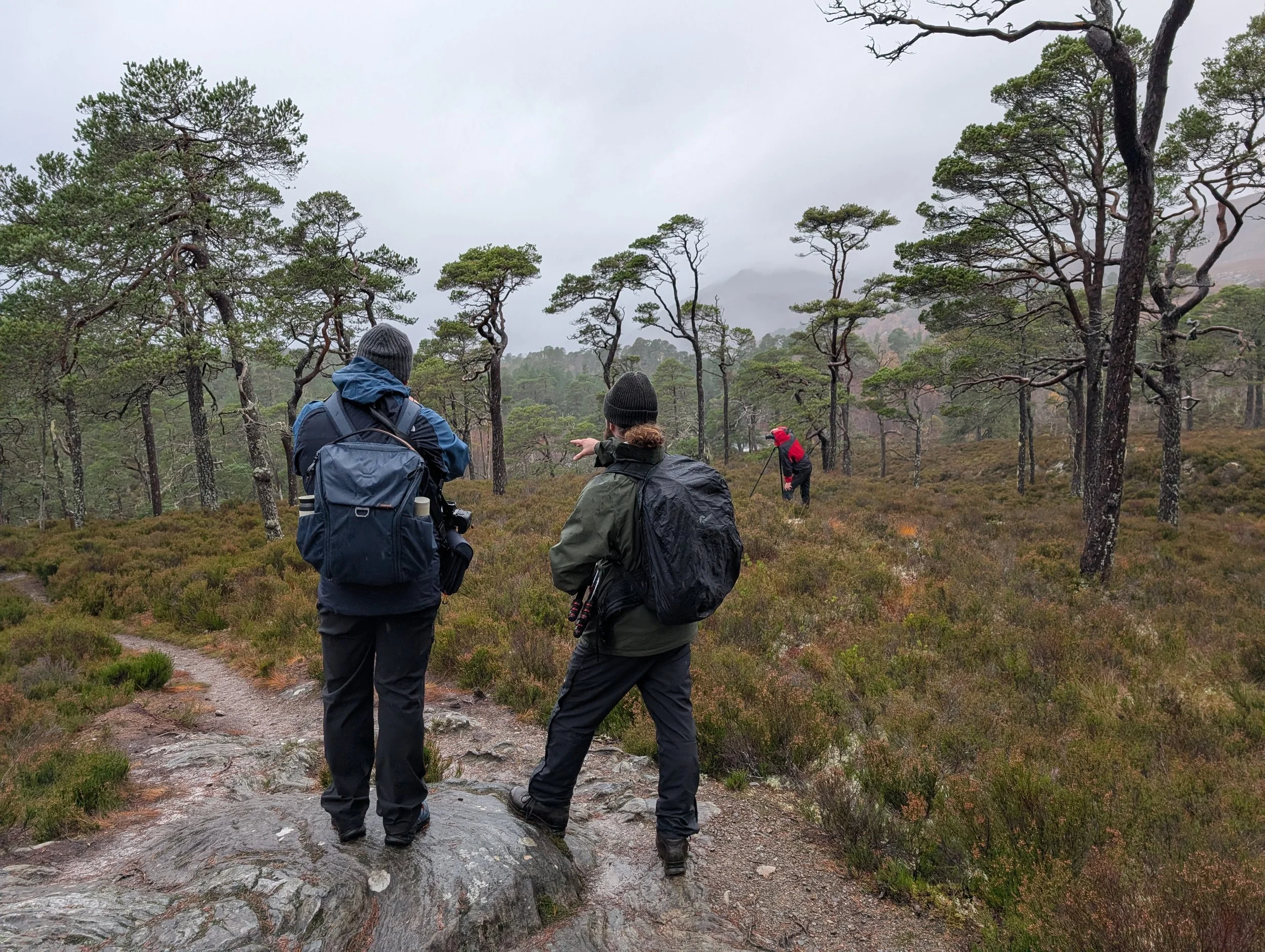
Time spent together in shared experiences creates community.
Group Photography Workshop in Scotland’s Ancient Caledonian Forest
Supply-Side Shock & Algorithmic Fatigue
By some measures, AI usage among social media professionals reached near-ubiquity in 2025, with 79% of creators reporting that AI enables faster production and 65% relying on it for at least half of their posts. Huge volumes of content have suddenly flooded our algorithm based media platforms — and not high quality content either. “AI slop” simply occupies algorithmic space but fails to provide any real value. Thankfully, there has been a large scale rejection of this content: preference for AI-generated content has plummeted from 60% in 2023 to 26% in 2026. This isn’t to say that AI use to aid content creation is inherently bad, but it must be deeply considered. In fact, I even used Gemini deep research to aid in the production of this article.*
This change in taste has resulted in one of the biggest aesthetic shifts I’ve witnessed in a long time. From the perfectly scripted and polished media of the last few years, we now have the return of hand-made, messy, almost wabi-sabi “authenticity”. Hand drawn and crafted is back in fashion. Perfection vs. authenticity has been a consistent conversation in the landscape photography communities I am a part of over the last couple of years, and I am now seeing it manifest in the wider world of design. Human-made has become a brand marker signifying that there is a real person behind the work (to the point that I now see people going out of their way to explicitly mention that their content is human-made). Is this providing true value or is it just another guise to capture our attention?
A number of things can point us towards an answer to this question. Average screentime is on the rise and with it our nervous systems are prone to what is being termed “upregulated anxiety” (a constant stream of small dopamine hits that disrupt circadian rhythms and melatonin production, leaving us in a state of constant preparation for nonexistent threats). We’ve all experienced digital fatigue at some stage and we’ve also all probably experimented or attempted a digital detox; switching my phone onto airplane mode when I go on backpacking adventures is one of my greatest joys in life! Many of my colleagues and friends even use apps that reduce access to social media on their devices, with the hope of ultimately reducing overall screentime. Algorithmic fatigue is also widespread. This is the frustration of not being able to find or access the content you want to see, even when you directly tell a platform to show it to you through features like following or subscribing (not to mention the volume of sponsored and suggested posts one is bombarded with on a constant basis).
All of these factors show the content bubble bursting is not just a taste-driven phenomenon, but also a psychological one: we are facing a burgeoning trust recession where the average person can no longer believe what they see online. With over 200 million creators worldwide, bringing our attention back to the human-made is a way to tell your audience that “this is real and you can trust me”. It is about creating the opportunity for depth of engagement not numbers and reach. If we choose to, we can use online platforms in the way they were originally intended to be used: as vehicles to connect with people all over the globe in a meaningful durable fashion.
Additionally, at least in the nature photography ecosystem amongst those that are not interested in short-form video, we have also seen the repeated wholesale rejection of Instagram on multiple attempts: there was the Vero surge, followed quickly by Bluesky and Mastodon. To some extent, these felt like futile efforts to solve the bigger problem as people slowly bled back to meta platforms. Ultimately, we have allowed the platform to dictate our behaviour, rather than our behaviour to dictate the platform. As we move towards a world of intentional media consumption, change starts with the user. Build real connections. Seek offline experiences. Foster community.
*Statistics in this article from various sources via Gemini

The future needs experiences which foster disconnection from digital devices and realign our attention to the natural world.
Adventure Photography Workshop in Scotland’s Remote Northwest
Community is Back; Offline is Premium
Cultural moments and physical events are becoming more and more valued; 73% of Gen Z & Millennials value them highly (intriguing for generations that have partially or entirely grown up in the digital era). This is paralleled by a migration from hyper-individuality to community, both online and in person. In a broader context, think run clubs, Patreons, members-only wellness centres (Soho Farmhouse, Equinox, or similar), direct newsletters & Substacks, and community-led discord channels. I’ve compiled a short list of online photography communities that I believe provide worthwhile value below, for anyone looking to connect on peer-validated platforms or be more intentional about how they view photography and interact digitally:
Nature Photography Collective’s Academy (Educational)
Michael Rung Photography’s Patreon or Shutter Nonsense Podcast Patreon (Free tiers available)
Craig Mod’s “The Good Place” (scroll down on this newsletter — also a good resource — to read more, members-only access)
As great as connecting with photographers all over the world via digital communities is, there is also a growing need for more high quality in-person experiences. While people were encouraged by algorithms to chase online followers and shallow “connections” with strangers over the last 15 years of the social media boom, offline has quietly become premium again. I myself feel a desire to spend less and less time online as the memories that I value most are almost exclusively experiential: moments spent in the bush with wildlife; hikes across mountains and deserts with friends; laughs around the campfire under starry skies. Bringing people back to these kindfs of meaningful experiences is where I believe nature photography can shine over the next decade. It is uniquely positioned to bridge the gap between technology and nature (after all, modern cameras are digital devices). This needs to be navigated carefully, however. There is a stark difference between experiencing nature through the camera and the camera enriching our experience of nature. In my opinion, this necessitates a step away from iconic locations and the creation of snapshots — spending 5 minutes at a location, grabbing a quick photo and moving on is not connecting on a deep enough level. We need to encourage everyone to make their own personal connection with nature, to explore, and to slow down. All of my photography workshops are based around this broad thesis and emphasise the need for reallocating our attention towards the present moment in wildness. It is the return of touch, intentionality, and human-led authenticity.

Experience is everything. These are memories and friends that last a lifetime.
Adventure Photography Workshop in the Drakensberg Mountains, South Africa
Conclusion: Quality
People aren’t necessarily rejecting content. They are rejecting the way it makes them feel: synthetic, not enough, and out of touch with reality. Consumers have reached a cognitive ceiling and are now being forced to take matters into their own hands by aggressively filtering their digital lives and screentime. Trust is no longer garnered by having the biggest following, by producing the highest volume of content, or by viral reach. Human-led authenticity is becoming the primary driver of value. The content bubble is deflating as we speak, but it takes time for the landscape to change into one that draws us towards nature and away from the ever-addicting hits of doomscrolling dopamine. It is a mass rebalancing. Photographers and artists that value their audience’s scarce and valuable time (and provide the most valuable experiences, such as in-person events or peer-validated communities) are best positioned for the increasingly digitally-integrated future we face. The physical world is the ultimate premium differentiator.

Airplane mode: on. Tent: pitched. Sunset: glorious.
Adventure Photography Workshop in Scotland’s Remote Northwest